
Are you able to RUN the VOLUME you would like every week? For many of us… it’s tough. So, check out these 5 Cross-Training methods you can add to your Training. That will definitely benefit your running and obstacle course racing (OCR) performance.
People take part in cross-training for a variety of reasons.
- It’s common for some people and they’ve always been into doing multiple modalities of training.
- Some discover it when they want to increase their fitness levels, but realize running volume is tough to increase quickly. Since it’s such an impact on the body, joints, muscles, etc.
- And some find it after dealing with an injury and not able to run like they want to while healing up.
It doesn’t matter where you started. But I’ll tell you this.
WE SHOULD ALL BE CROSS-TRAINING.
It’s one of the best ways that we can build cardio fitness and strength without taxing our bodies too much. It can build up other muscles that might be neglected on during our runs. It can reduce potential injuries. And as a bonus, it can be a different level of fun and mix up your normal routine.
When looking at cross-training methods. It’s best to choose options that will complement your primary sport.
For those of us in obstacle course racing, these 5 methods. In no particular order. Are great options to consider implementing.

RUCKING
I’m going to bet that EVERY SINGLE ONE OF US has rucked before. Whether you realize it or not. In its simplest form, RUCKING is walking or hiking with a weighted ruck, rucksack or backpack.
Why is the first method I chose Rucking?
Because a huge part of the OCR community is either actively taking part in Ultra OCR events or have goals to do one in the future.
And I would bet money, that ALL OF US who have ever done a Mountainous Spartan Beast, Spartan Ultra, Tough Mudder Infinity or 24 hour event. HAVE ALL WALKED ON COURSE.
Heck, most of us are walking a large portion of those events.
So. Rucking can give you a massive advantage in these events. The added weight in the ruck increases the intensity of the workout, helping to build strength, endurance and durability of being on your feet for extended periods of time.
So add rucking to your training. It can be intentional. Or even more simple, where the next time you take the dog for a walk or go for a hike, just throw a ruck on with weight. When you’re halfway into a Spartan Ultra in New Jersey or Kelowna, you’ll be happy you did.
A similar idea we’ll mention is incline hiking on the treadmill.
Walking. Uphill.
It can provide huge benefits to the longer distance OCR events. And if you really want to heat things up, you can add a ruck on during this too.

BICYCLING
Biking is a great way to add low impact volume to your training. It’s very comparable to running, in that it works your legs and lower body muscles.
In a recent article on How the Pros are Training for the TM 8-hr Infinity Race, we saw that 13 out of 20 athletes researched took part in bicycling.
The types of workouts you do on a bike can also complement running.
A high intensity bike session can help you with more explosive speed on a run.
And going hard uphill on a bike will translate to running uphill.
Biking has options within it too.
Hop on a spin bike at the gym.
Use your own bike inside with a bike trainer.
Bike on the Road. Bike on Gravel. Or head out on the trails and Mountain bike outside.
There are a ton of options with bicycling. And even effort levels are flexible. You can go as easy or hard as you want on a bike. Adding this form of cardio to your training will boost your cardiovascular engine. While also taking almost none of the hard impact that running would have on your body.
There’s a reason why the majority of pro level running athletes jump on the bike.
It works.

STRENGTH TRAINING
Strength training is relevant to all runners. But even more so for the OCR community.
We’re out there lifting and carrying sandbags, pulling heavy sleds, gripping rings and bars, climbing walls and ropes and throwing our bodies around rigs, nets and platforms.
So Strength Training here can be split in two.
It can be relevant to your running.
Or can be relevant to obstacles you’ll see out on course.
Strength that’s relevant to your running. This will help your primary and secondary running muscles. And will help reduce injuries and build durability. It’s mostly a lower body and core focus. Strength examples being Deadlifts, Squats, Split Squats, and Lunges.
Strength that’s relevant to obstacle course racing. Anything where you’re pulling, pushing, crawling or lifting. This will build up upper body, grip and other components vital to completing obstacles. Helping you stay away from penalties and re-tries. Examples being Sandbag work, Kettlebell swings, pushups, dead hangs, farmers carries, pullups and pullup variations to work upper body and grip.
If you aren’t taking part in strength training or find yourself slacking off on these ones.
Step it up and get after it, ideally 1-3x per week.
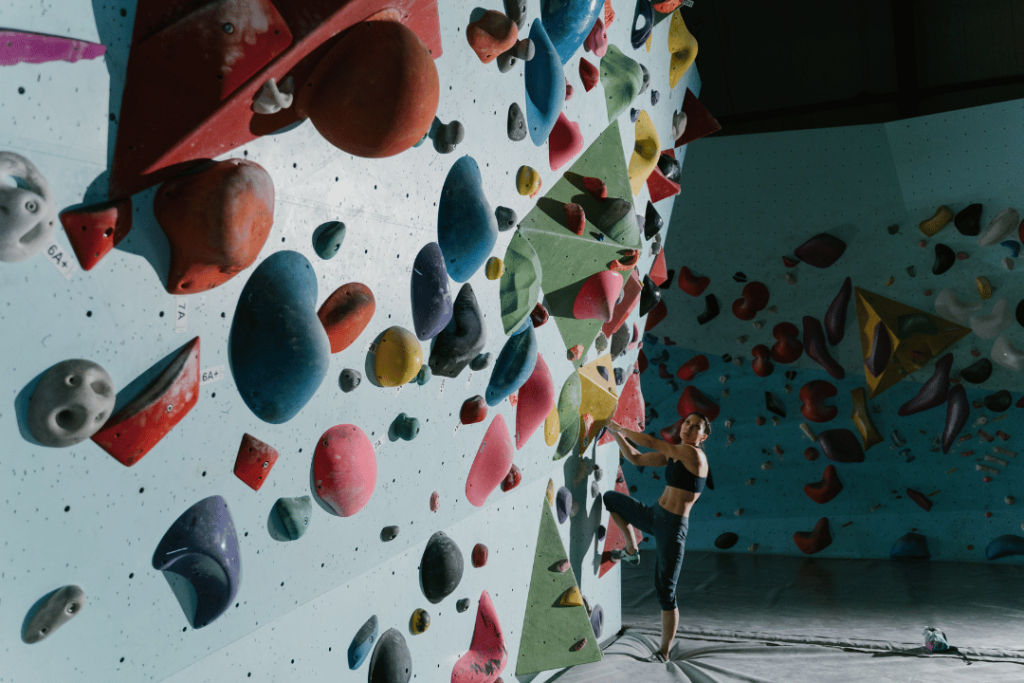
ROCK CLIMBING
Rock climbing can be an excellent activity for OCR runners for a number of reasons.
Grip strength is the primary similarity between the two sports. It’s key in navigating up a rock wall and key when completing obstacles like rope climbs, monkey bars, pulling sleds and hoist weight.
Balance and coordination is another benefit. It’s heavily used when navigating climbing routes. Like when you are traversing through many of the obstacles we see on course. Z-Wall, Olympus, Gibbons and multiple Rigs.
It’s a full body workout. Engaging multiple muscle groups, such as arms, back, core and legs.
And lastly, it can be a fun and low impact activity you can do with friends.


CROSSFIT
CrossFit, functional fitness or HIIT type classes. These classes offer a variety of movements and workouts that can complement and enhance your OCR goals.
The workouts you find in these classes work on strength training, cardiovascular conditioning, agility, and flexibility. Not to mention, some of these classes offer direct training to obstacles we see on course. Like rope climbs, box jumps and the one everyone loves. BURPEES.
Classes like this are sort of a catch-all and help you develop a well-rounded level of fitness.
And. They are in a group setting. You can get that sense of community and camaraderie among members. Who offer support, encouragement, and accountability in training. If your personality is the type that does better in training with a group setting. It’s definitely something to look into.
But be cautious. As these classes often do push high-intensity training and the group vibe can make it hard to take it easy. If running is your primary focus, high-intensity quality work should be done with running. Leaving little room for further intensity on your cardiovascular system. So be careful with your effort levels.
I’ll say it again.
WE SHOULD ALL BE CROSS-TRAINING.
Hopefully you’ve uncovered some new Cross-Training ideas to go after in your training. To mix up that routine, keep it fresh, have fun and best of all. To complement your running and OCR goals.
Leave a Reply